
Out of Site, Out of Mind: Best Practices for Creating Valuable On-Site Campaign Content
Chloe Meek
Posted 13 April, 2026 by Chloe Meek in Digital PR
Out of Site, Out of Mind: Best Practices for Creating Valuable On-Site Campaign Content
PR efforts often focus outward, prioritising outreach and coverage from external publications.
As a result, some campaigns struggle to demonstrate lasting value once coverage fades — with over half of PR professionals stating that proving ROI beyond vanity metrics is their most persistent challenge.
At the same time, campaigns are increasingly judged on long-term impact and ROI, and the media is becoming more selective — with 68% of journalists prioritising pitches with original research and data.
This makes high-quality on-site campaign content more crucial than ever. By anchoring campaign findings on-site, brands can extend campaign longevity, strengthen credibility and secure meaningful backlinks.
The Value of Supporting On-Site Content
On-site campaign content serves as a primary resource, positioning your brand’s E-E-A-T on the topic while establishing a credible reference point for external coverage.
It supports outreach efforts by providing journalists with digestible data, context and a clear narrative, prioritising citations and backlinks over keyword rankings alone.
In some cases, publications will only offer backlinks to original data sources, making strong on-site content a must-have for linking opportunities.
While brand mentions offer visibility, backlinks from reputable outlets drive traffic to your website and reinforce your brand as a trusted source in the minds of consumers, making meaningful engagement more likely.
So, how can you transform on-site content into a valuable campaign asset?
Best Practices for Creating Successful On-Site Assets
When curating on-site content for PR campaigns, you’ll need to target not only your core consumers, but also prospective journalists and any audiences attracted through publication backlinks.
Blog posts and long-form articles are ideal for presenting your full dataset in depth, boosting credibility, linking potential and SEO performance.
Follow these best practices to create effective on-site campaign assets that engage journalists and audiences alike.
Establish Your Credibility and Hook Early
Position yourself as the primary data source by verifying your credibility as early as possible:

It’s also important to identify the narrative and explain why your findings matter within the first couple of sentences.
This can be expanded on from press releases and pitch emails: What’s the key statistic and newsworthy aspect? Why should journalists care about this?
To add further credibility, include your full methodology at the bottom of the page to allow journalists to sift through your full data set. This is useful if they’re after specific angles or statistics that don’t appear in the main copy.
Make Data Digestible
The information needs to be easily scannable for prospective journalists.
This can be effectively done by formatting key statistics in bold and using bullet points instead of lengthy sentences.

A table of contents is particularly helpful for longer-form blog posts if a journalist is searching for a particular angle and is only interested in a subsection of your research.

Additionally, engaging visuals like charts and tables that clearly convey the story of the data are more appealing to journalists.
Adding branding to these visuals can also create more brand exposure if they’re reused in coverage pieces.
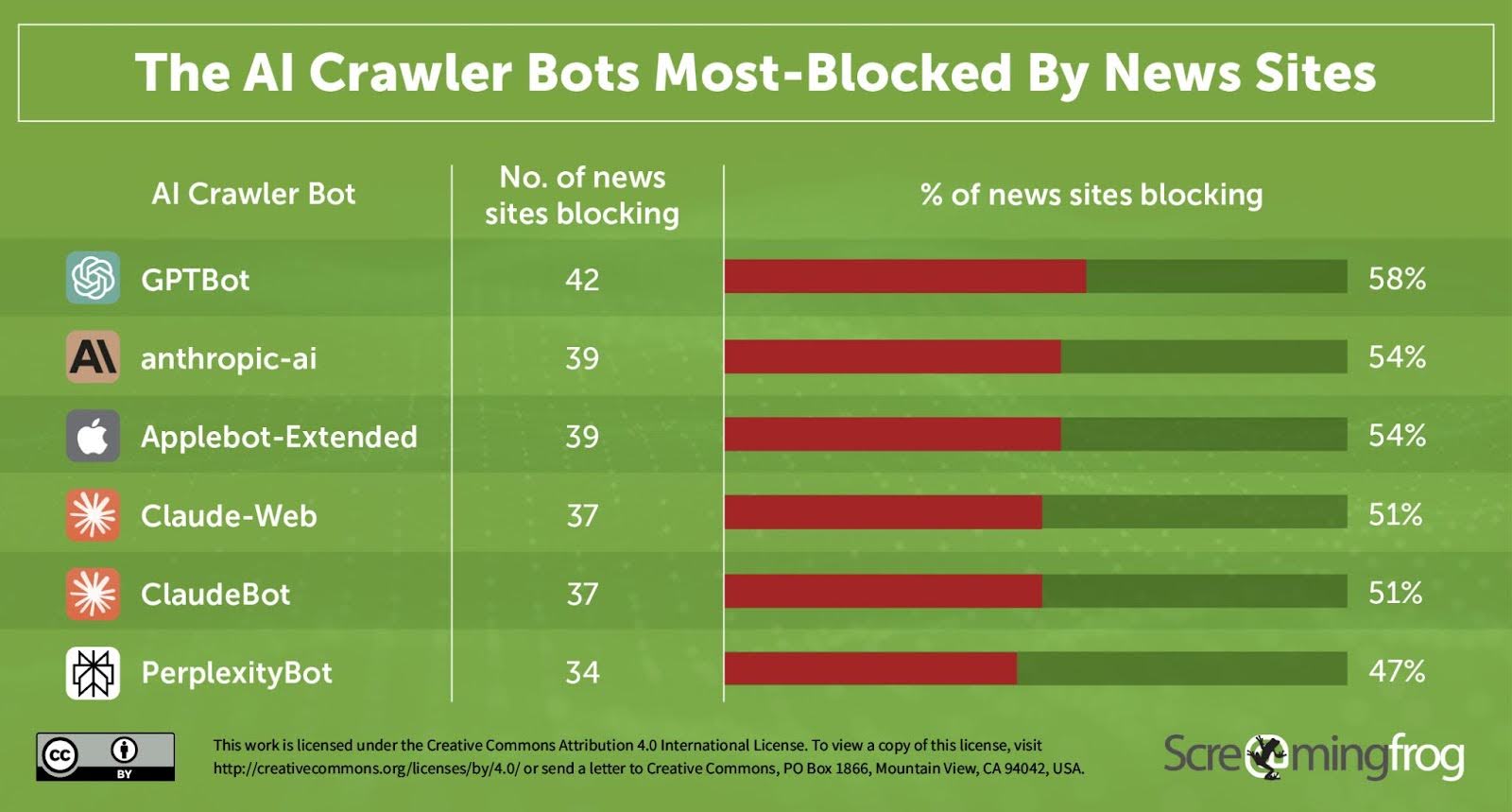
You’ll also need to balance optimising keyword rankings and organic traffic with using direct, accessible language that highlights key points and engages readers and journalists alike.
Leverage Brand Exposure
To maximise the value of potential backlinks, include a clear call to action at the end of the copy and add relevant internal links throughout.
This guides readers to related content and extends the user journey, creating opportunities to monetise from key events and further visibility.
Incorporating social sharing buttons and concise, pre-filled text that highlights the narrative makes it easy for readers to share your research. Supporting this with strong preview images that reflect the topic will help encourage clicks when the content is shared.
Plan for Longevity
Some research is evergreen and lends itself to yearly updates. Refreshing content with new data can help to renew interest, drive additional traffic and relaunch a campaign with minimal effort.
Similarly, if an emerging trend or news event conveniently aligns with your existing research, adding this as a timely hook can regenerate traction and boost relevance.
Even outside of active campaigns, research that regains interest can attract organic backlink opportunities — especially when it resides on an on-site page intended for regular updates.
From an SEO perspective, it’s generally best practice to keep the same URL instead of creating a new one when updating content.
This helps to avoid duplicate content issues and prevents internal competition for the same keywords, preserving both search rankings and the authority of the indexed page.
Search engines and AI overviews often favour refreshed content, as it signals relevance and demonstrates that the information is current.
When updating the copy or data, consider adding a ‘last updated’ date in the byline. This transparency keeps readers informed and helps search engines recognise that the page has been maintained and refreshed.
Maximising Campaign Value
Following these best practices transforms on-site PR content from a supporting asset into a core component of your campaign strategy, retaining traction through on-site traffic and updates where interest could otherwise quickly fade.
Strong on-site content generates valuable linking opportunities and encourages meaningful engagement and conversions through internal links and calls to action — delivering value beyond vanity metrics like impressions.




0 Comments